Shopify vs Shopify Plus: The Upgrade Decision I Would Actually Use
A practical decision framework for Shopify Plus: checkout extensibility, B2B, automation, permissions, custom apps, and when the plan is not worth it yet.
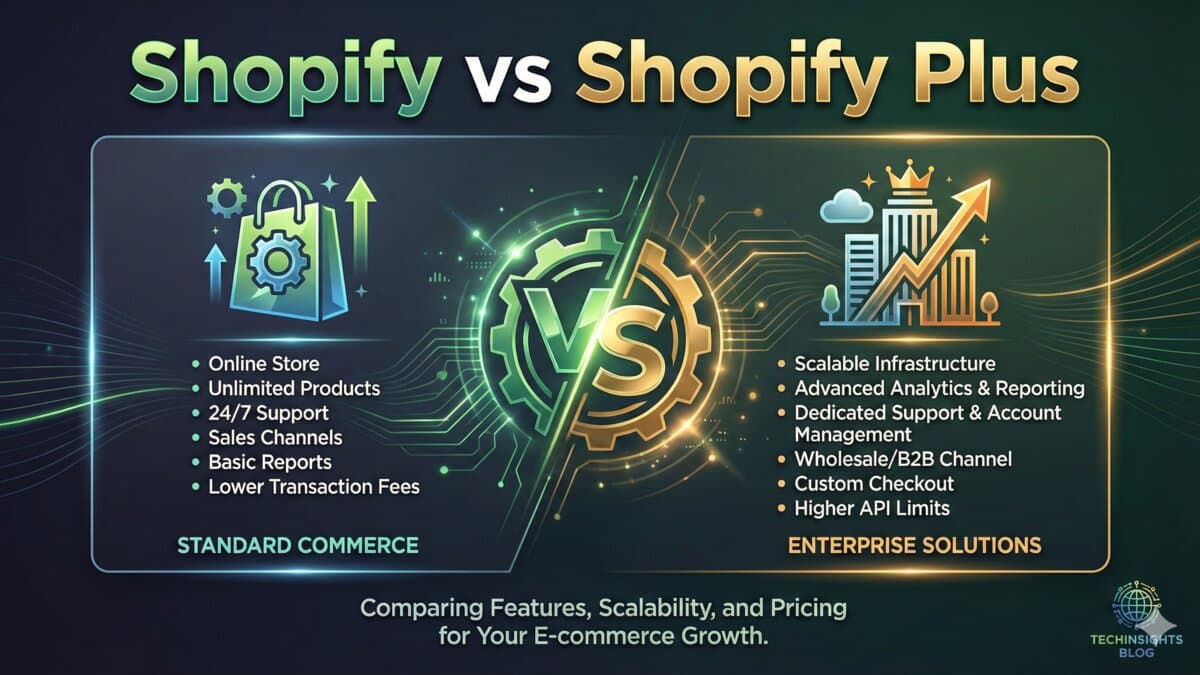
Short answer: upgrade to Shopify Plus when the operational value of Plus features is larger than the plan cost and implementation cost. Do not upgrade only because revenue crossed a round number. Upgrade when checkout control, B2B, automation, permissions, app limits, or custom workflows are actively constraining the business.
I usually frame this as a constraint audit. What work is the team doing manually? What checkout or B2B requirement cannot be built cleanly on the current plan? What risk appears during sales, wholesale ordering, or international expansion?
Strong Reasons to Consider Plus
- You need Shopify B2B features such as company accounts, catalogs, payment terms, or wholesale flows.
- You need checkout extensibility beyond what apps on the current plan can safely provide.
- You run launches or promotions that need better automation and operational control.
- You need custom apps with higher access needs and a serious governance process.
- You have multiple markets, brands, or teams that need more structured operations.
Weak Reasons to Upgrade
- A generic agency proposal says Plus is better.
- The store is slow because of theme and app bloat, not plan limitations.
- The team has not used the features already available on the current plan.
- The business wants prestige rather than a clear operational requirement.
Decision Table
Need native B2B company accounts? Strong Plus signal.
Need minor visual checkout changes? Investigate apps first.
Need complex payment/shipping rules? Plus may help if Functions/customization are required.
Need faster storefront performance? Fix theme/app stack first.
Need staff workflow control? Evaluate Plus permissions and automation value.
Implementation Cost Matters
Plus is not magic by itself. Checkout extensions, B2B setup, custom apps, Markets configuration, and analytics cleanup still need planning, development, QA, and maintenance. I would include that implementation cost in the decision, not only the monthly platform cost.
The Upgrade Audit I Would Run
- List every current manual workaround.
- Map each workaround to a Plus feature, app, custom app, or process fix.
- Estimate revenue saved or operational hours removed.
- Check whether existing theme and app debt should be fixed first.
- Define the first 90 days of Plus work before signing.
My Practical Rule
If Plus unlocks a specific workflow that will be used every week, it is worth serious evaluation. If the only argument is that the store is growing, I would wait and fix the current stack first.
Sources
- Shopify Plus plan documentation: https://help.shopify.com/en/manual/intro-to-shopify/pricing-plans/plans-features/shopify-plus-plan
- Shopify B2B features overview: https://help.shopify.com/en/manual/b2b/setting-options
My Shopify review angle
When I would review this in a client Shopify store, I would start with the operational surface instead of the headline. Shopify vs Shopify Plus: The Upgrade Decision I Would Actually Use only becomes useful when the reader can map it to a theme file, app setting, Admin API job, checkout rule, or storefront behavior they can actually test.
I would not leave this as theory. I would apply it to one actual page, integration, bug, or client decision and keep the evidence beside the recommendation.
Pre-launch Shopify checks
- Check the exact Shopify surface before changing code.
- Test with products that have missing images, long variants, empty metafields, and unusual prices.
- Confirm the change is visible in server-rendered HTML where SEO/AEO matters.
- Keep a rollback path for app or theme changes.
- Write a handoff note so the merchant team knows what can be edited safely.
Edge cases in the store
- The article sounds correct but does not explain what to edit in Shopify.
- The guidance ignores app conflicts, API versions, or messy product data.
- The change helps desktop screenshots but hurts mobile checkout.
- The page makes a claim that is not backed by visible content or schema.
Merchant handoff block
Implementation check for Shopify vs Shopify Plus: The Upgrade Decision I Would Actually Use:
1. Confirm the Shopify surface involved: theme, Admin API, checkout, app, or storefront.
2. Test with messy catalog data, not only a demo product.
3. Verify permissions, API version, and rollback path.
4. Record the production edge case this change protects.
A short review block like this is often enough to catch the gap between a nice idea and a safe production change.
Where I would add more proof
I would keep improving this page by replacing any remaining abstraction with artifacts from actual work: test output, screenshots, metrics, source references, or before/after notes.
For a shorter post, I would add depth through one tested example rather than filler. One good edge case or validation note is more useful than another generic overview.
- One real example from the workflow.
- One edge case that breaks the simple advice.
- One metric or signal to watch after the change.
- One clear action the reader can take today.
A practical merchant scenario
For Shopify vs Shopify Plus: The Upgrade Decision I Would Actually Use, I would keep one concrete example in the page so the advice does not stay abstract. The example should show the starting state, the decision being made, the check I would run, and the signal that tells me the change worked. That makes the content more useful for readers and more defensible for SEO/AEO because it demonstrates practical experience instead of repeating a general claim.
- Starting state: what the store, app, workflow, or codebase looks like before the change.
- Decision point: what the reader needs to choose or fix.
- Validation: the command, screenshot, metric, support ticket, or QA step that proves the change.
- Risk: the edge case that could still fail in production.
- Follow-up: the next improvement I would make after the first pass is stable.
Implementation summary
Do not scale the advice blindly. Prove it on one useful case, watch the result, then decide whether to repeat it.
Review path for shopify-vs-shopify-plus-when-to-upgrade:
1. Pick one real example.
2. Apply the checklist.
3. Record before/after evidence.
4. Watch one metric or failure signal.
5. Keep or revert based on the result.Want this built for you instead of DIY?
I'm Karan — a Top Rated Plus Shopify Expert ($300K+ earned, 100% Job Success). If you'd rather hand this to someone who's done it hundreds of times, let's talk.
🛠️Shopify Development Tools You Might Like
Tags
📬 Get notified about new tools & tutorials
No spam. Unsubscribe anytime.
Comments (0)
Leave a Comment
No comments yet. Be the first to share your thoughts!