Claude Fable 5 and Mythos 5 Access Suspended: My Honest Take
Anthropic suspended Claude Fable 5 and Mythos 5 after a US government directive. My take on the sudden cutoff, security argument, foreign national rule, and trust problem.
The Short Version
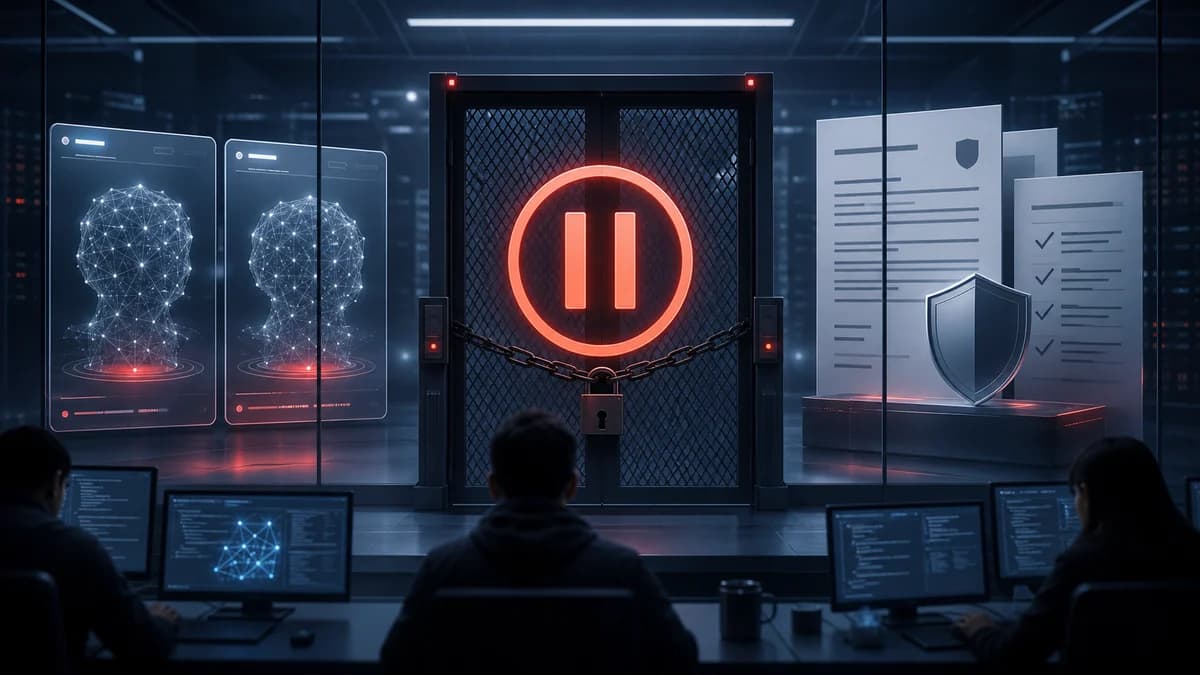
Anthropic has suspended access to Claude Fable 5 and Mythos 5 after a US government directive tied to national security concerns.
That sounds like a clean security story at first. A powerful model launches, the government sees a risk, access gets paused.
But the details are messier.
According to Anthropic's own statement, the directive told the company to suspend access to Fable 5 and Mythos 5 for foreign nationals, whether they are inside or outside the United States. Anthropic says that included foreign national employees inside Anthropic itself. Because that is difficult to enforce cleanly across customers, teams, companies, and internal access, Anthropic says the practical result was that it had to abruptly disable Fable 5 and Mythos 5 for everyone.
The BBC's report frames it as a suspension just days after public release, following concerns about cybersecurity and hacking.
My honest take: if a model is dangerous enough that foreign nationals cannot use it, the public deserves a clearer explanation than "national security concern." And if the concern is narrow enough that Anthropic says other public models can already do the same thing, abruptly cutting access to paying users creates a different problem: trust.
What Actually Happened
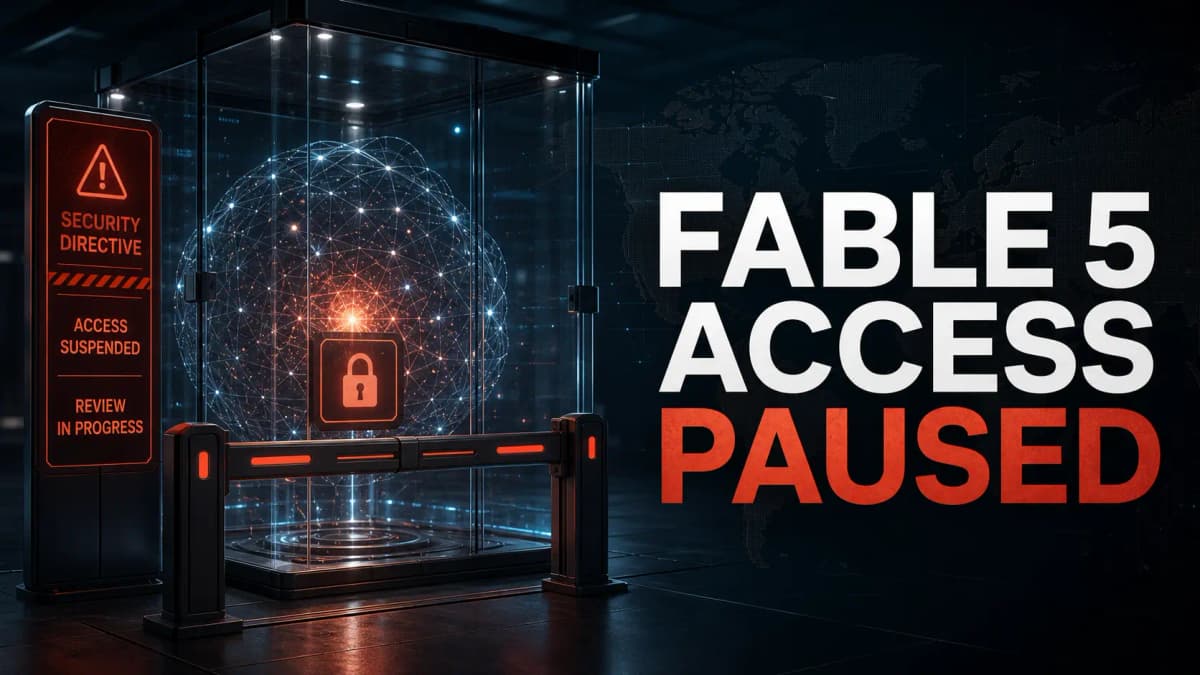
On June 12, 2026, Anthropic published a statement saying it had received a US government directive at 5:21pm ET.
The directive, as Anthropic described it, required the company to suspend all access to Claude Fable 5 and Claude Mythos 5 by any foreign national. That included foreign nationals outside the US, foreign nationals inside the US, and foreign national Anthropic employees.
Anthropic said access to other Anthropic models would not be affected.
The reason, according to Anthropic's understanding, was a possible method of bypassing or jailbreaking Fable 5. Anthropic says it reviewed a demonstration of the technique and found it was used to identify a small number of previously known, minor vulnerabilities. The company also says publicly available models can discover those vulnerabilities without the same bypass.
That is the part that makes this situation hard to read from the outside.
If the government has evidence of a serious national security risk, the government may not want to publish the full details. I understand that. But from a customer point of view, this still feels like a sudden breaker switch pulled on a product people had just started testing.
For developers, founders, and companies evaluating AI tools, that matters.
You do not only evaluate a model by how smart it is. You evaluate whether you can build on it.
Why This Sudden Cutoff Feels Bad
I do not think people should ignore AI security risk. That would be naive.
Fable 5 and Mythos 5 were never positioned as ordinary models. Anthropic itself spent months saying Mythos-class capability needed special safeguards. BBC also notes that Anthropic had previously enabled limited pre-release access for a small group of organizations because the model was powerful enough to raise hacking and exploitation concerns.
So yes, there is a real security conversation here.
But the rollout still looks bad.
First, Anthropic publicly released Fable 5, talked about safeguards, and positioned it as a generally available Mythos-class model. Then, days later, the model is suspended because of a government directive. That creates whiplash.
Second, the restriction described by Anthropic is not simply "countries outside the US cannot use this." It is "foreign nationals cannot use this," including people physically inside the United States. That is a much more aggressive boundary.
Third, Anthropic says it disagrees with the action and believes the disclosed issue does not justify recalling a commercial model. So customers are left in a strange middle position: the government says national security, Anthropic says the evidence is narrow, and users lose access anyway.
That is bad for trust.
If I start using a model for real development work, I need to know whether it will be available tomorrow. I can handle rate limits. I can handle price changes. I can handle safety filters. What is harder to handle is a top model being switched off suddenly after launch, especially without a clear public technical explanation.
The Security Argument Is Not Fake
There is a lazy version of this story that says the government is overreacting and everything is political.
I do not think it is that simple.
Frontier AI models can help with defensive security work, but the same ability can help offensive work. A model that can read code, find vulnerabilities, write patches, reason across large systems, and operate for long tasks is useful to both sides.
That is the uncomfortable part of AI progress.
The same capability that helps a good engineer secure a system can help a bad actor understand where to attack. The difference is not always in the prompt. Sometimes the difference is the user, the environment, and the intent.
So I understand why governments are nervous.
But nervous is not enough. If the standard becomes "a narrow jailbreak exists, so a commercial model must be suspended," then every major frontier model is probably at risk of the same treatment. Anthropic says something similar in its statement: perfect jailbreak resistance is not currently possible, and if this standard is applied broadly it could effectively halt new deployments.
That is the real policy question.
Are we trying to block genuinely dangerous deployment, or are we setting an impossible standard where any jailbreak becomes a reason to pull a model?
Those are very different things.
My Biggest Question: Why Can US Nationals Still Use It?
The part I keep coming back to is the foreign national restriction.
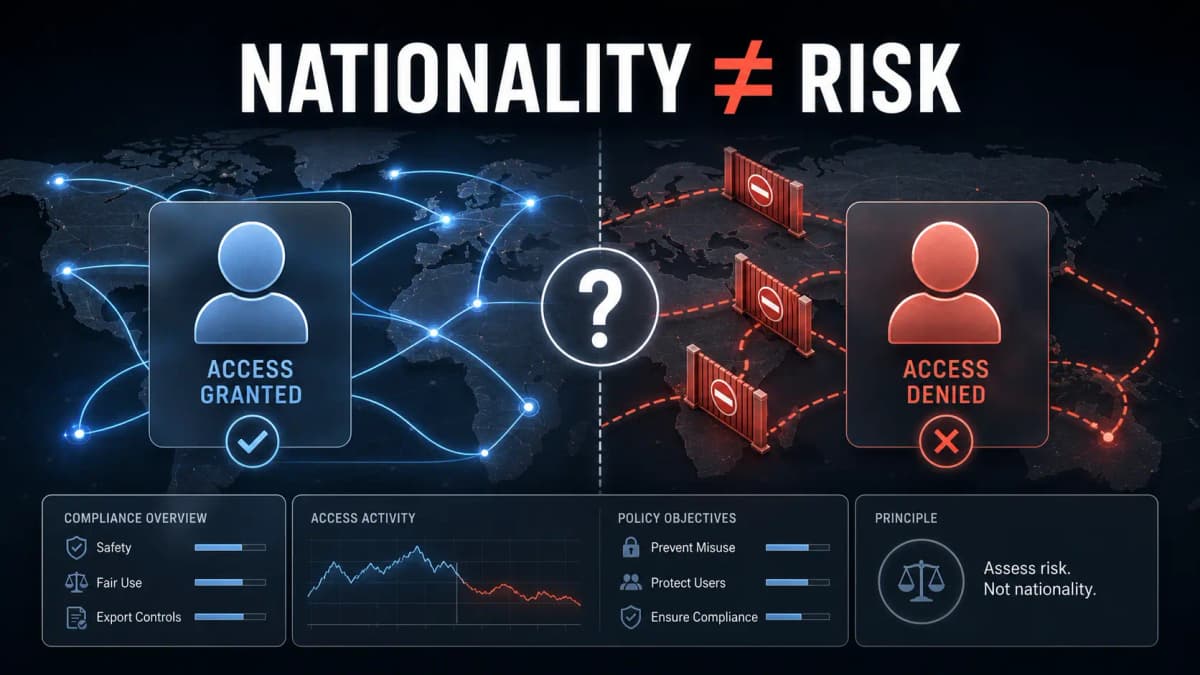
If Fable 5 or Mythos 5 is a security threat because it can help with hacking, then why is nationality the deciding line?
A US citizen can misuse a model. A foreign national can use a model for legitimate defensive work. A security researcher in India, the UK, Germany, Singapore, or Canada may be helping companies fix real vulnerabilities. A US national can still be careless, malicious, or compromised.
I understand the export-control logic. The US government often treats advanced technology as a national asset and tries to prevent strategic capability from flowing to foreign actors. That is how chip controls and defense technology controls often work.
But AI model access is not a box of hardware crossing a border. It is a live service, used by people in mixed teams, remote companies, universities, open-source projects, and global security organizations.
The nationality line is administratively convenient for government policy, but it does not map cleanly to actual misuse risk.
If the concern is that the model can be used to find vulnerabilities, then serious controls should be based on use case, monitoring, organization, identity verification, audit trails, and abuse response. Nationality can be one factor in a broader risk model, but treating it as the main line feels blunt.
That is why this situation feels uncomfortable.
It creates a message that sounds like: this model is too dangerous for non-US people, but acceptable for US people. From a global developer perspective, that is not a satisfying security principle.
The Real Damage Is Product Trust
I use AI tools every day. I use them for coding, writing, research, debugging, and planning. When a new model is better, I want to test it quickly.
But a sudden access break changes how I think about adoption.
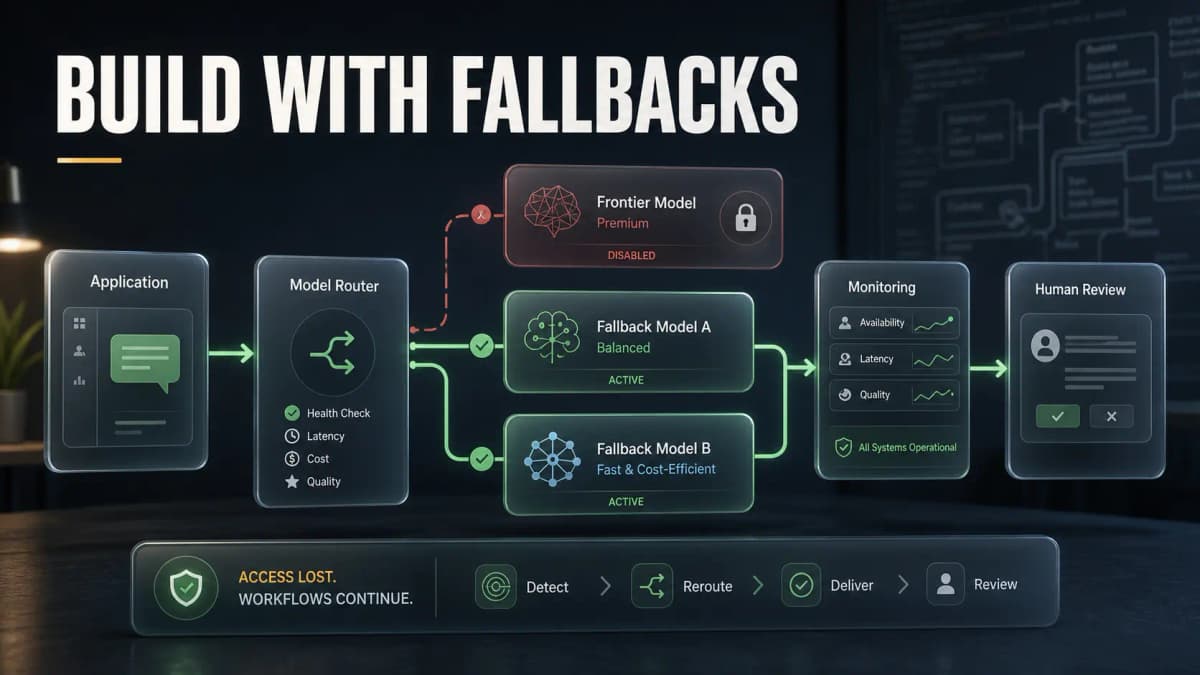
If I am building a serious workflow, I do not want my team dependent on one frontier model that can disappear because of a government letter, a policy change, a capacity issue, or a safety incident. That does not mean I stop using the best model. It means I design with fallback.
For companies, the lesson is practical:
- Do not build critical workflows around a single model provider.
- Keep model routing flexible.
- Keep prompts and evals portable.
- Test fallbacks before you need them.
- Do not assume launch availability means long-term availability.
- Read retention and safety policies before sending sensitive work.
This is exactly why model abstraction layers matter more now. Not because every provider is the same, but because they are not. The best model today may be unavailable tomorrow. The safest model may be weaker. The most capable model may have stricter logging. The cheapest model may fail on long tasks.
If your business depends on AI, you need a system that can move.
Anthropic Has a Communication Problem Here
To be fair, Anthropic did publish a detailed statement quickly. It explained the timing, the scope, its disagreement with the directive, its safety posture, and its view that the jailbreak concern is narrow.
That is better than silence.
But the larger communication problem started before the suspension.
Anthropic spent months telling the market that Mythos-class models were unusually powerful and risky. Then it released Fable 5 publicly. Then access was suspended almost immediately after a government directive. BBC notes that some critics already questioned whether the "too powerful" framing was safety language or marketing spin.
That is the problem with hype around danger: if you use danger as part of the product story, people will believe you when something goes wrong.
You cannot have it both ways forever.
If the model is safe enough for public release, explain the safety case clearly. If it is dangerous enough that access has to be restricted by nationality, explain what kind of risk justifies that boundary. If the government is wrong, say precisely what kind of process should replace this sudden directive.
Anthropic does gesture toward that last point. The company says the government should be able to block unsafe deployments, but through a transparent, fair, technically grounded statutory process.
I agree with that.
AI regulation cannot be vibes, press pressure, or private letters that leave everyone guessing.
What Developers Should Do Now
If you were planning to use Fable 5 or Mythos 5 in production, I would pause and redesign the dependency.
For everyday users, the immediate answer is simple: use another Anthropic model or another provider until access is restored. Anthropic says other models are unaffected.
For teams, the answer is more serious:
- Treat frontier model access as unstable until proven otherwise.
- Keep a routing layer between your application and the model provider.
- Store model-specific prompts separately from core product logic.
- Build evals that compare output quality across providers.
- Keep human approval on high-impact security, legal, medical, or financial workflows.
- Assume policy risk is now part of AI architecture.
That last point is new for a lot of teams.
In 2023 and 2024, the main AI risks people worried about were hallucinations, cost, latency, privacy, and vendor lock-in. Now add sudden regulatory access risk. Not theoretical risk. Real access risk.
My Take
I do not think this proves Anthropic was reckless.
I also do not think it proves the US government is obviously right.
What it proves is that frontier AI is no longer just a product category. It is infrastructure, security policy, export policy, and geopolitics wrapped into one API.
That is the uncomfortable shift.
As a developer, I want access to the best tools. As someone who builds real products, I also want predictable rules. Sudden access suspension after a launch is bad for users, bad for teams, and bad for confidence in the AI market.
If Fable 5 and Mythos 5 are genuinely dangerous, the public needs a better explanation of what kind of danger crosses the line. If the issue is only a narrow jailbreak that finds minor known vulnerabilities, then disabling access for everyone looks like overreach.
The worst outcome is the middle: companies hype models as almost too powerful, governments react with blunt restrictions, and builders are left trying to ship products on top of unstable ground.
That is where we are right now.
FAQ
Why did Anthropic suspend Claude Fable 5 and Mythos 5?
Anthropic says it received a US government directive requiring it to suspend access to Fable 5 and Mythos 5 for foreign nationals because of national security concerns. To comply, Anthropic says it had to disable access for all customers.
Are other Claude models affected?
Anthropic says access to other Anthropic models is not affected by this directive.
What was the security concern?
Anthropic says its understanding is that the government was concerned about a possible jailbreak method for Fable 5. Anthropic says the demonstrated issue appeared narrow and involved previously known, minor vulnerabilities that other public models could also find.
Why does the foreign national rule matter?
The rule matters because it applies based on nationality, not only location or use case. That means a foreign national inside the United States could be restricted, while a US national may not be. From a developer and business perspective, that creates difficult questions about fairness, enforcement, and whether nationality is the right proxy for AI misuse risk.
What should companies learn from this?
Companies should avoid depending on one frontier model without a fallback. Keep model routing flexible, test alternative providers, and treat policy risk as part of AI architecture.
Sources
Want this built for you instead of DIY?
I'm Karan — a Top Rated Plus Shopify Expert ($300K+ earned, 100% Job Success). If you'd rather hand this to someone who's done it hundreds of times, let's talk.
🛠️Generative AI Tools You Might Like
Tags
📬 Get notified about new tools & tutorials
No spam. Unsubscribe anytime.
Comments (0)
Leave a Comment
No comments yet. Be the first to share your thoughts!