Rich Hickey on AI: Why "Thanks, AI" is a Warning, Not a Celebration
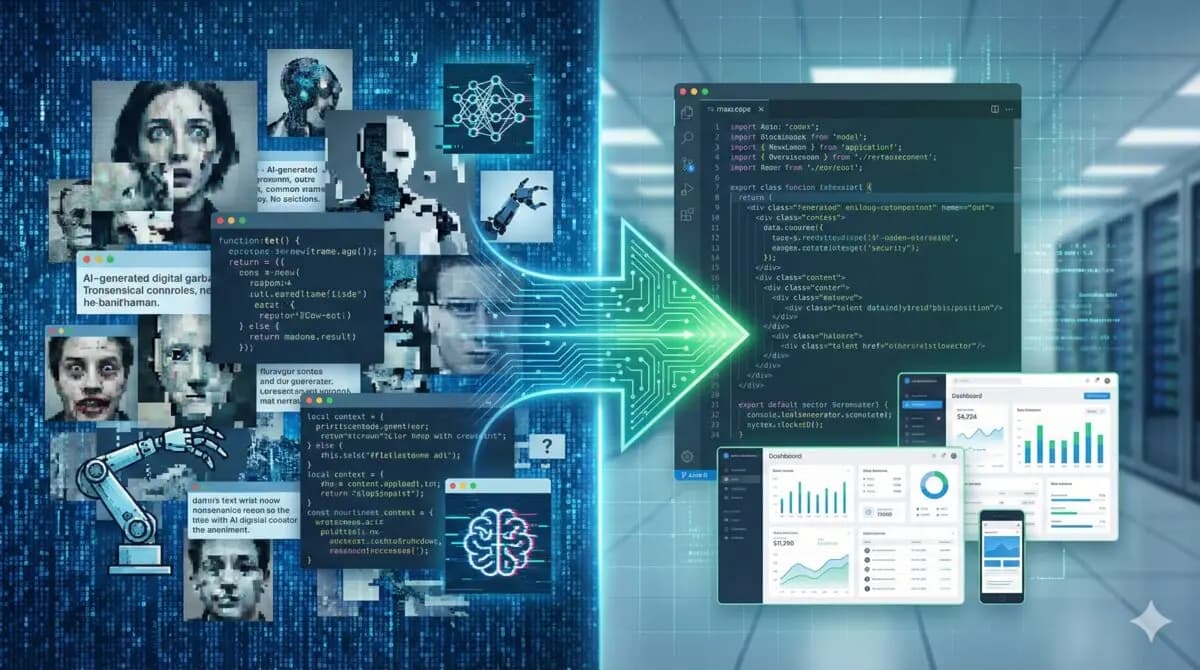
Clojure creator Rich Hickey offers a critical perspective on AI in development. Are we trading deep thought for cheap code? Here is my take on maintaining engineering quality in the AI era.
The Conflict: Hammock Time vs. Instant Generation
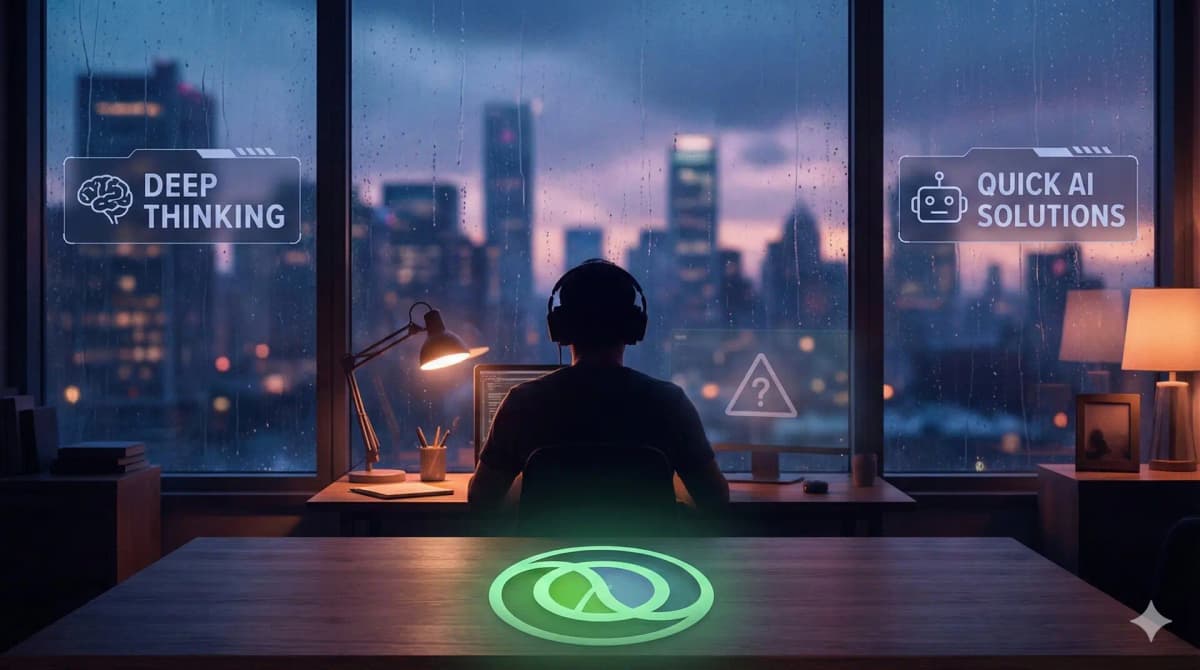
Hickey's philosophy rests on the idea that the hardest part of software isn't typing the syntax; it's understanding the problem. "Hammock Driven Development" posits that you should spend significant time away from the keyboard, closing your eyes and thinking through the system's state, transitions, and failures before you write a single line.
Generative AI, by contrast, is an engine of instant gratification. You type a prompt, and you get a solution. The danger Hickey identifies is that this bypasses the critical phase of struggle. When we let an LLM solve the logic puzzle for us, we rob ourselves of the mental context required to debug it when it inevitably breaks (or simply hallucinates) six months down the line.
The Junior Developer Trap
One of the most concerning points raised in these discussions is the impact on junior engineers. Experience is often the sum of our failures and the hours we spent banging our heads against a wall until a concept clicked.
If a junior developer relies on AI to handle every difficult algorithm or architectural decision, they risk becoming what some call "framework assemblers" rather than engineers. They might produce working apps, but they lack the intuition that tells you why a certain database schema will fail at scale. As Hickey suggests, the path to mastery requires traversing the landscape yourself, not taking a helicopter ride to the destination.
The Commoditization of Syntax
However, there is a flip side. If AI is excellent at repetitive, boilerplate code, perhaps that is exactly what we should offload.
In my work with Shopify and Next.js, there is a lot of "plumbing"—setting up API routes, configuring Tailwind classes, or writing standard GraphQL mutations. Letting AI handle this drudgery is a net positive. It clears the mental clutter, allowing senior engineers to focus on the exact thing Hickey prizes: system design.
The key is the distinction between implementation and intent. AI can handle the implementation, but the human must provide the rigorous intent. If you don't know what good code looks like, you can't verify if the AI did a good job.
My Take: The "Editor" Mindset
Rich Hickey's warning is valid: we cannot abdicate our responsibility to think. But we also shouldn't ignore the most powerful lever for productivity we've seen in decades.
The solution is to shift our mindset from "Writer" to "Editor."
- Design First: Do the Hammock time. Sketch the architecture. Define the data models. Do this without AI.
- Generate Second: Use AI to fill in the implementation details based on your rigorous design.
- Audit Ruthlessly: treat AI-generated code with more suspicion than human-written code. Read every line.
Conclusion
"Thanks, AI" shouldn't be a sarcastic dismissal of the technology, nor a blind acceptance of it. It should be a reminder that tools serve the craft, not the other way around. As we rush to integrate Generative AI into our workflows, let's ensure we aren't outsourcing the one thing that makes us valuable: our ability to reason clearly about complex systems.
My practical AI read
For AI topics, I would separate what is confirmed, what is likely, and what still needs human review. Rich Hickey on AI: Why "Thanks, AI" is a Warning, Not a Celebration should not ask the reader to trust hype; it should show how to evaluate the workflow safely.
I would not leave this as theory. I would apply it to one actual page, integration, bug, or client decision and keep the evidence beside the recommendation.
Model-output review checks
- Use primary sources for factual claims.
- Keep AI-generated output behind human review where risk exists.
- Log prompts or decisions when the workflow affects customers.
- Avoid sending data the task does not require.
- Measure whether AI made the workflow safer or only faster.
AI workflow traps
- The article treats a demo as production proof.
- The workflow hides data and review assumptions.
- The model output is trusted without validation.
- The post predicts too much and teaches too little.
AI workflow check block
AI review checklist for Rich Hickey on AI: Why "Thanks, AI" is a Warning, Not a Celebration:
- Separate confirmed facts from prediction.
- Name the data source.
- Describe the failure mode.
- Keep a human review step.
- Measure the workflow after shipping.
A short review block like this is often enough to catch the gap between a nice idea and a safe production change.
Next human-review step
I would keep improving this page by replacing any remaining abstraction with artifacts from actual work: test output, screenshots, metrics, source references, or before/after notes.
For a shorter post, I would add depth through one tested example rather than filler. One good edge case or validation note is more useful than another generic overview.
- One real example from the workflow.
- One edge case that breaks the simple advice.
- One metric or signal to watch after the change.
- One clear action the reader can take today.
An AI validation example to keep
For Rich Hickey on AI: Why "Thanks, AI" is a Warning, Not a Celebration, I would keep one concrete example in the page so the advice does not stay abstract. The example should show the starting state, the decision being made, the check I would run, and the signal that tells me the change worked. That makes the content more useful for readers and more defensible for SEO/AEO because it demonstrates practical experience instead of repeating a general claim.
- Starting state: what the store, app, workflow, or codebase looks like before the change.
- Decision point: what the reader needs to choose or fix.
- Validation: the command, screenshot, metric, support ticket, or QA step that proves the change.
- Risk: the edge case that could still fail in production.
- Follow-up: the next improvement I would make after the first pass is stable.
Human-review summary
Do not scale the advice blindly. Prove it on one useful case, watch the result, then decide whether to repeat it.
Review path for rich-hickey-thanks-ai-analysis:
1. Pick one real example.
2. Apply the checklist.
3. Record before/after evidence.
4. Watch one metric or failure signal.
5. Keep or revert based on the result.Want this built for you instead of DIY?
I'm Karan — a Top Rated Plus Shopify Expert ($300K+ earned, 100% Job Success). If you'd rather hand this to someone who's done it hundreds of times, let's talk.
🛠️Generative AI Tools You Might Like
Tags
📬 Get notified about new tools & tutorials
No spam. Unsubscribe anytime.
Comments (0)
Leave a Comment
No comments yet. Be the first to share your thoughts!