AI Won't Replace Junior Developers Yet: Insights from the Creator of Ruby on Rails
David Heinemeier Hansson argues that AI isn't ready to replace junior devs. Discover why human intuition and the learning curve remain irreplaceable in software engineering.
The "Taste" Gap
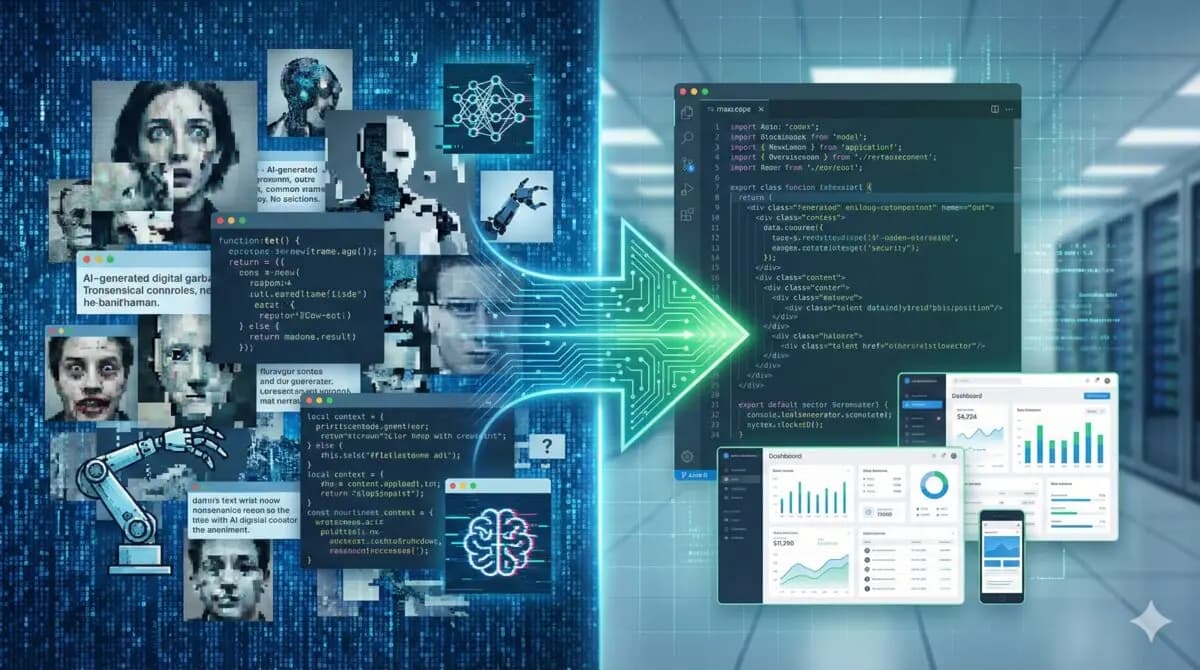
One of the primary arguments DHH and other senior leaders make is about "taste" and context. AI Large Language Models (LLMs) are essentially pattern matchers. They predict the next likely token based on billions of lines of code they have been trained on. This means they are excellent at producing average code—boilerplate that works but isn't necessarily efficient, secure, or architecturally sound.
Junior developers are not just hired to type syntax; they are hired to learn the business domain. An AI can write a Python script to scrape data in seconds, but it often lacks the judgment to know if that data should be scraped, how it fits into the broader application architecture, or if it violates a specific client's privacy policy. The ability to discern "good" code from "working" code is a skill developed through trial, error, and human mentorship—a loop that AI currently disrupts but cannot replace.
The Hallucination Problem
In my experience building Shopify apps and web solutions, AI is a confident liar. It will hallucinate a nonexistent API endpoint or suggest a library that was deprecated three years ago with absolute certainty.
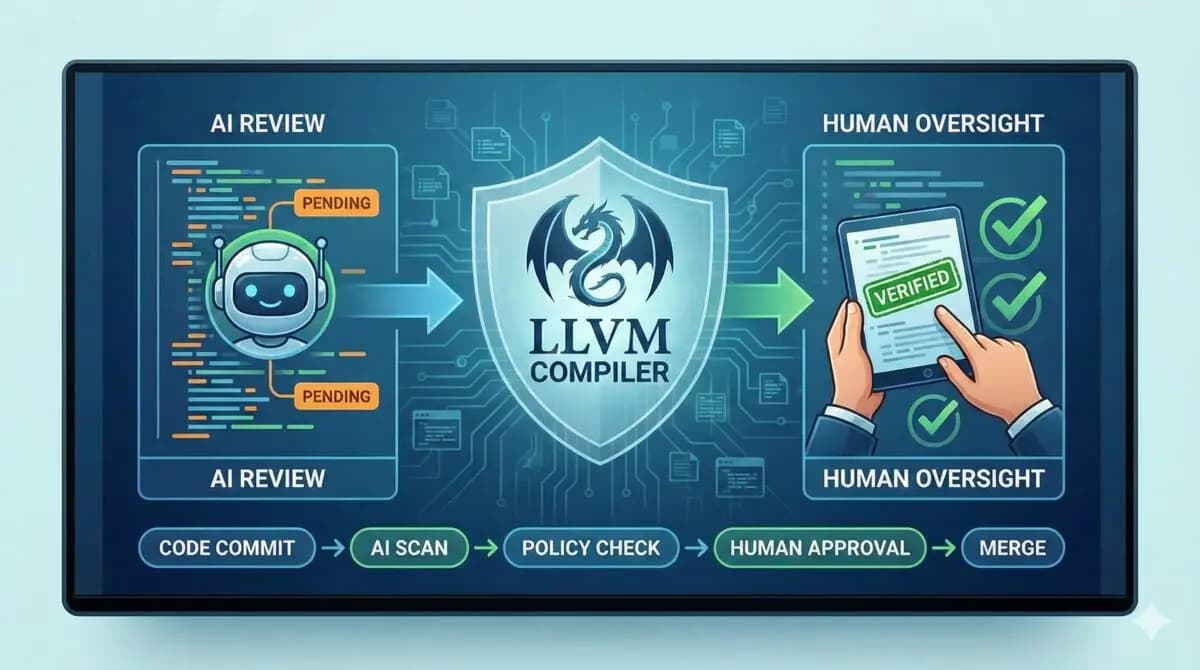
If you replace junior developers with AI, you burden your senior developers with the task of reviewing and debugging AI-generated code. Seniors are an expensive resource. If they spend all their time untangling subtle AI bugs, their productivity plummets. Junior developers, conversely, grow into their roles. They might make mistakes, but they learn from them and eventually become the seniors who maintain the system. AI models do not "learn" from a specific project's history in real-time without complex fine-tuning or RAG (Retrieval-Augmented Generation) pipelines, which are still maturing.
AI as a Tutor, Not a Replacement
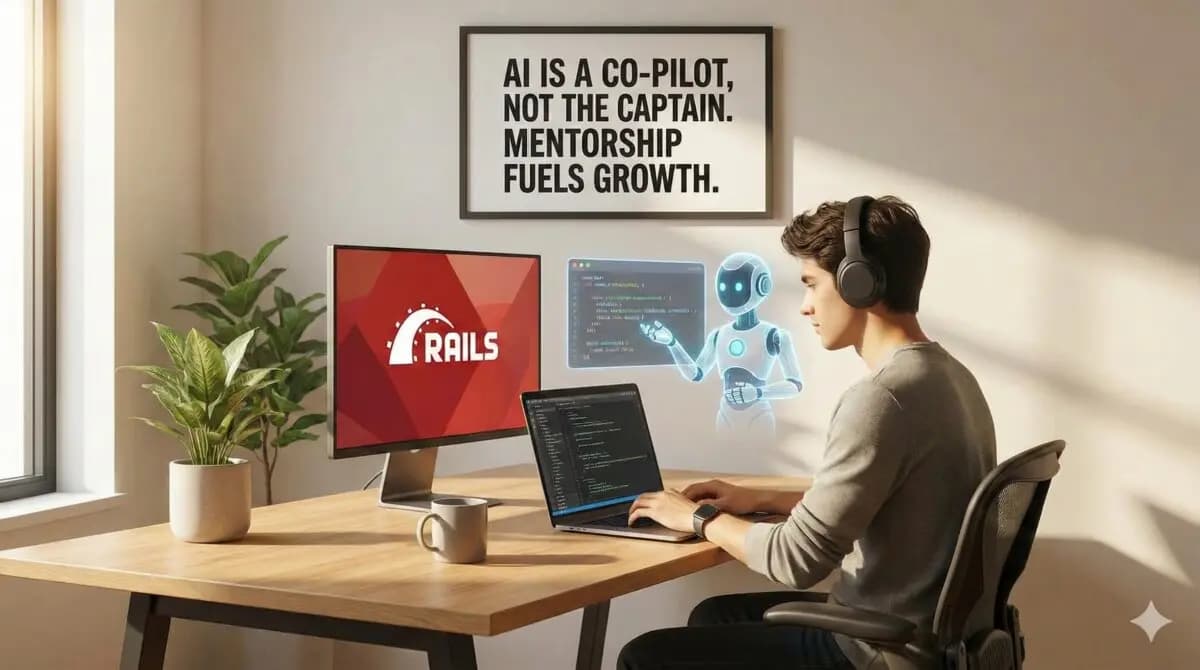
Instead of viewing AI as a competitor, the smartest junior developers are using it as a super-powered tutor. DHH suggests that AI lowers the barrier to entry, allowing people to build things they couldn't before. For a junior dev, this is a superpower.
- Unblocking: Stuck on a regex? AI solves it instantly.
- Explanation: Don't understand a complex React hook? AI can explain it in five different ways until it clicks.
- Boilerplate: AI handles the tedious setup, allowing the junior dev to focus on the unique business logic.
The developers who will struggle are those who treat AI as a crutch—copying and pasting without understanding. Those who use it to accelerate their learning curve will become more valuable, not less.
The Economic Reality of Software
Software demand is not a fixed pie. As development becomes cheaper and faster thanks to AI, the demand for software increases. We will build more software, not just the same amount with fewer people. We need humans to manage, integrate, and maintain this explosion of digital products.
Furthermore, the "Junior" label is a temporary state. Every Senior Developer was once a Junior. If companies stop hiring juniors, they cut off the supply chain of future seniors. Most forward-thinking tech companies understand this ecosystem risk. They need fresh eyes and diverse perspectives to innovate, something a model trained on past data cannot provide.
Conclusion
How I Would Audit This
The durable point is that junior developers do more than type code. They learn the domain, ask questions, maintain systems, write tests, fix awkward bugs, and become the senior developers who can later review AI-generated work.
- Separate coding speed from engineering judgment.
- Look at onboarding and domain learning.
- Value debugging and maintenance work.
- Teach juniors to review AI output early.
- Measure growth, not only immediate ticket throughput.
Production Failure Modes
The production risk is hollowing out the learning pipeline. If teams stop hiring juniors, they may save short-term review time and lose future engineers who understand the product deeply.
- Senior developers become the only reviewers.
- AI output is accepted without enough human growth.
- Documentation gets worse because nobody teaches through it.
- Maintenance work has no owner.
- The team lacks people who know why old decisions were made.
Copy/Paste Starting Point
Junior + AI task shape:
1. Reproduce the bug manually
2. Ask AI for possible causes
3. Patch the smallest failing case
4. Add a regression test
5. Explain the fix in review notes
This uses AI without skipping the learning loop. The junior still builds debugging skill and product understanding.
What I Would Ship First
I would use AI to make juniors more effective, not invisible.
- Pair AI output with code review.
- Ask juniors to write test cases.
- Let them own small production bugs.
- Review reasoning, not only diffs.
- Document lessons from incidents.
My practical AI read
For AI topics, I would separate what is confirmed, what is likely, and what still needs human review. AI Won't Replace Junior Developers Yet: Insights from the Creator of Ruby on Rails should not ask the reader to trust hype; it should show how to evaluate the workflow safely.
I would not leave this as theory. I would apply it to one actual page, integration, bug, or client decision and keep the evidence beside the recommendation.
Model-output review checks
- Use primary sources for factual claims.
- Keep AI-generated output behind human review where risk exists.
- Log prompts or decisions when the workflow affects customers.
- Avoid sending data the task does not require.
- Measure whether AI made the workflow safer or only faster.
AI workflow traps
- The article treats a demo as production proof.
- The workflow hides data and review assumptions.
- The model output is trusted without validation.
- The post predicts too much and teaches too little.
AI workflow check block
AI review checklist for AI Won't Replace Junior Developers Yet: Insights from the Creator of Ruby on Rails:
- Separate confirmed facts from prediction.
- Name the data source.
- Describe the failure mode.
- Keep a human review step.
- Measure the workflow after shipping.
A short review block like this is often enough to catch the gap between a nice idea and a safe production change.
Next human-review step
I would keep improving this page by replacing any remaining abstraction with artifacts from actual work: test output, screenshots, metrics, source references, or before/after notes.
Want this built for you instead of DIY?
I'm Karan — a Top Rated Plus Shopify Expert ($300K+ earned, 100% Job Success). If you'd rather hand this to someone who's done it hundreds of times, let's talk.
🛠️Generative AI Tools You Might Like
Tags
📬 Get notified about new tools & tutorials
No spam. Unsubscribe anytime.
Comments (0)
Leave a Comment
No comments yet. Be the first to share your thoughts!